transport standards
Sample Receipt: Acceptance Criteria, Rejection and the Receipt Log
What a testing laboratory checks when an item arrives, how temperature on receipt is established and recorded, acceptance criteria written before the item is seen, the consultation and disclaimer ISO/IEC 17025 requires, and a receipt log template.
Sample receipt is the laboratory's documented decision, made before any testing, that an item is what it is claimed to be, arrived in the condition required, and is suitable for the test requested — or the recorded reason that it is not. ISO/IEC 17025 requires deviations from specified conditions to be recorded on receipt; where suitability is in doubt, or the item does not match its description, the laboratory consults the customer before proceeding and records the outcome; and where the customer asks for testing to go ahead regardless, the report carries a disclaimer identifying the results that may be affected 1. Acceptance criteria are that decision written down in advance, so that it is made the same way every time.
Two neighbouring procedures are easily confused with this one. An out-of-specification investigation concerns a result, after testing; receipt concerns an item, before a result exists. And the goods-in inspection of purchased material concerns a buyer's own stock; receipt concerns an item submitted for testing, whose custody the laboratory is accepting on someone else's behalf. The three should never share a form.
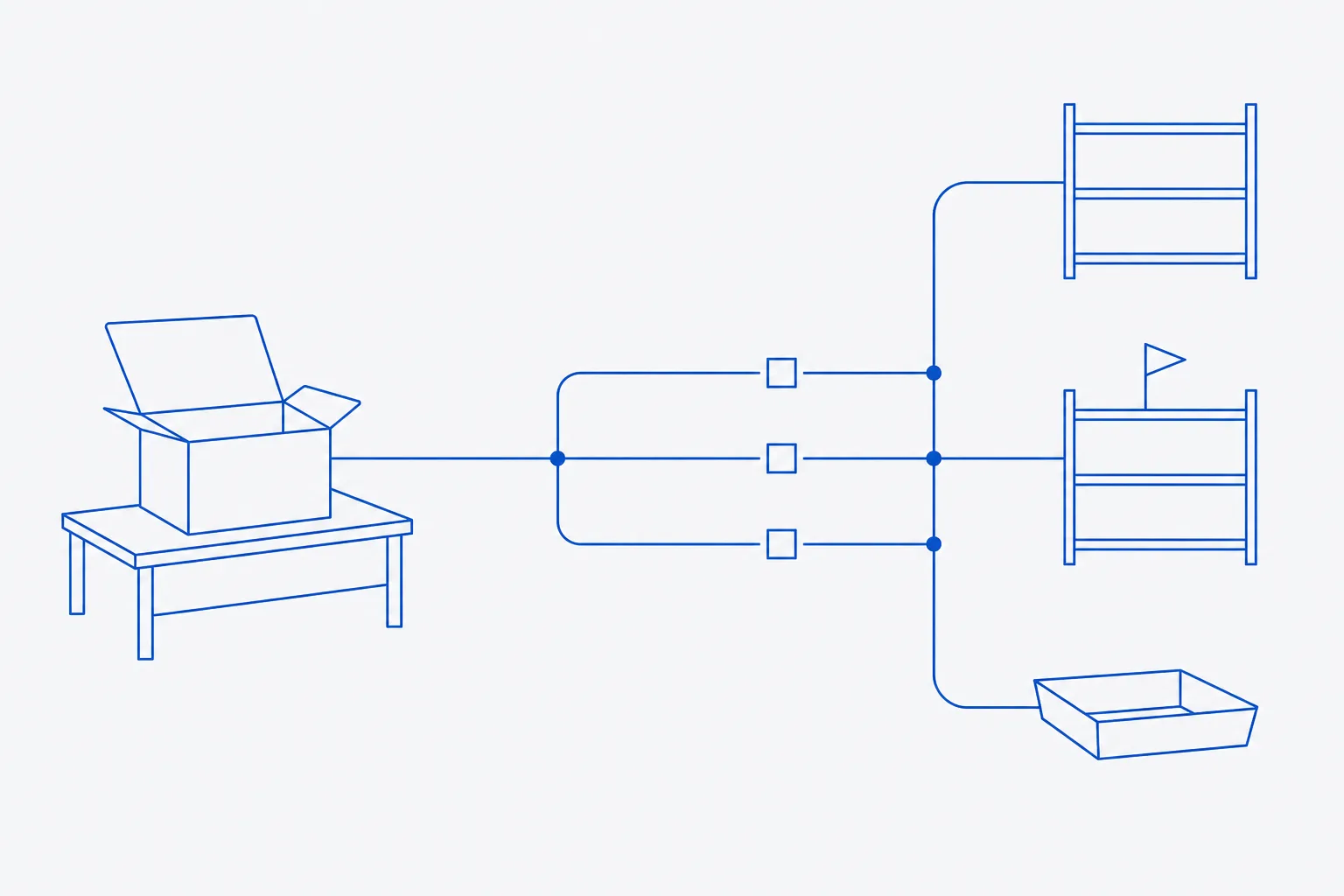
What is checked on arrival
| Check | Evidence | Typical criterion |
|---|---|---|
| Package integrity | Outer packaging inspected before opening | No crushing, puncture, staining or leakage |
| Seal | Seal state and number against the custody form | Intact; number matches |
| Documents | Custody form, contents list, test request | Present, complete, mutually consistent |
| Identity | Labels on each container | Every container labelled, legible, matching the form |
| Count and quantity | Containers counted; volume or mass estimated | Count matches; enough for the requested tests and any repeat |
| Container and closure | Visual inspection | Type suitable for the test; closure intact |
| Temperature | Logger trace, coolant state, measured reading | Within the specified transport condition |
| Elapsed time | Collection or preparation time against receipt time | Within the holding time for the test |
| Hazard marking | Marks against the stated contents | Consistent; unexpected biological marks trigger containment handling |
For a Category B biological consignment the itemised contents list sits between the secondary and outer packaging, so reconciliation of the list against the item count happens at a defined point in unpacking, before any primary receptacle is handled 3. The custody form is signed for at the same moment, with receipt time and the receiver's name, so that the laboratory's responsibility has a recorded start 5.
Temperature on receipt
Temperature is the check most often recorded as a bare number with no method, which makes it close to useless. The value and the way it was obtained are one entry. WHO shipping guidance expects the receiver to have instructions for downloading and distributing logger data and to inspect the container's physical condition at the destination 2 — the same two actions belong at the top of any receipt procedure.
| Evidence | Supports | Does not support |
|---|---|---|
| Logger trace for the whole transit | Magnitude and duration of any excursion at the logger position | Conditions at other positions in the package |
| Coolant state | Whether coolant capacity was exhausted | When it was exhausted |
| Probe reading in a surrogate container packed alongside | Payload-like temperature at the moment of opening | History before opening |
| Infrared reading of a container surface | Surface temperature at that instant | Contents temperature; frosted or reflective surfaces read poorly |
| Threshold indicator | That a limit was or was not crossed | Peak, duration or timing |
- Stop the logger and read it before it is removed from the package. Record its serial number.
- Record coolant state: frozen, partly thawed, liquid; dry ice present, partly sublimed or absent.
- Take any measured reading within a defined interval of opening, and record the instrument and method.
- Compare against the specified condition, not against what seems reasonable.
- File the trace against the receipt record, not in the logger software alone.
Acceptance criteria
Each criterion has three outcomes, set out before any item arrives. The middle outcome exists because many deviations do not make a result invalid, only qualified, and the decision to proceed belongs to the customer once the deviation has been explained to them 1.
| Criterion | Accept | Accept with recorded deviation | Reject |
|---|---|---|---|
| Seal | Intact, number matches | Intact, number not recorded by sender | Broken or missing, with evidence of opening |
| Temperature | Within specified condition throughout | Short excursion documented by logger | Condition exceeded with no duration evidence, where the test is temperature-sensitive |
| Elapsed time | Within holding time | Marginally over, where the method tolerates it | Beyond the holding time the method permits |
| Identification | All containers labelled and matching | Minor transcription difference resolved in writing by the customer | Unlabelled or illegible container; cannot be attributed |
| Quantity | Sufficient for tests and a repeat | Sufficient for tests only | Insufficient for the requested test |
| Container | Intact, suitable type | Unsuitable type, transferable without loss | Leaking or broken primary receptacle |
Where the item received differs from the request — a different number of containers, a different matrix, an analysis the item cannot support — the difference between request and contract is resolved before laboratory activities begin, and any deviation the customer asks for must not affect the laboratory's integrity or the validity of the results 1.
Consulting the customer and the disclaimer
- Record the deviation as found: what, measured how, against which criterion.
- Place the item on hold under its specified storage condition. Holding is not accepting.
- Contact the customer. State the deviation and the results it may affect, plainly.
- Record the date, the person consulted and the instruction given — proceed, replace, return or dispose.
- If testing proceeds, record that the report will carry a disclaimer identifying the affected results.
- Carry the deviation reference into the test record and the report, so that it cannot be separated from the result.
Damaged or leaking packages
A leaking package that may contain a biological substance is an incident before it is a receipt question. UK guidance for infectious substances sets out the response: isolate the area, keep unauthorised people away, do not touch damaged containers or spilled material without protective clothing, take particular care with broken glass, and leave clean-up to a trained person; damaged packages cooled with dry ice may show water or frost from condensation, which should not be touched because it may be contaminated 4. Inspection for damage and incident reporting are retained obligations under the Category B packing instruction 3. Receipt resumes only once the package is contained, and the incident reference goes on the receipt record.
The receipt log
| Field | Content |
|---|---|
| Receipt number | Sequential, never reused |
| Date and time received | At the laboratory, not at the building |
| Received by | Name, not initials alone |
| Carrier and tracking reference | As on the delivery record |
| Sender and custody form number | Cross-reference to the custody record |
| Package condition | As found, before opening |
| Seal numbers and state | Read, not copied from the form |
| Temperature evidence and method | Logger serial and outcome, coolant state, measured value and instrument |
| Containers received | Count; customer identifiers |
| Laboratory identifiers assigned | Cross-referenced to customer identifiers |
| Deviations | Each, with criterion reference |
| Customer consultation | Date, person, instruction |
| Decision | Accepted; accepted with deviation; rejected |
| Storage location and time | Position-level location, time placed |
Receipt procedure
- Record arrival time and inspect the outer packaging before opening.
- If there is leakage or damage consistent with a biological hazard, stop and follow the incident procedure.
- Read and record the seal numbers and state. Photograph the closure.
- Open in the location the hazard marking requires. Read the logger and record coolant state.
- Reconcile contents against the itemised list and the custody form. Sign the custody form with time.
- Inspect each container: label, closure, condition, quantity.
- Apply the acceptance matrix. Record each outcome against its criterion.
- Assign laboratory identifiers and label containers without covering the originals.
- Place accepted or held items into specified storage and record the location and time.
- Consult the customer on any deviation and record the instruction before any testing begins.
What happens to a rejected item
Rejection ends the testing decision, not the laboratory's custody. The item is still in the laboratory's possession, so clause 7.4.1 still applies to it: it is stored under its specified condition, protected, identified and eventually returned or disposed of under a recorded instruction 1. Rejection is a decision about suitability for the requested test, and it is recorded with the same care as acceptance.
- Record the criterion failed and the evidence, with the receipt number.
- Segregate the item from accepted material and label it as rejected, without covering the original labels.
- Notify the customer in writing, stating the reason and the options: replacement, return or disposal.
- Do not test a rejected item “for information” unless the customer instructs it in writing, and then report it with the disclaimer.
- Record the customer's instruction, then carry it out and record the date and method.
- Close the custody record with the disposition entry.
Trend the rejections. A sender whose consignments repeatedly arrive warm, unlabelled or short is a packing or procedure problem at source, and the receipt log is the only place that pattern becomes visible.
Why the deviation record matters later
Receipt is the last moment at which the condition of an item can be observed rather than inferred. Coolant sublimes, frost melts, a logger gets reset, a seal is thrown away with the box. An item accepted with a recorded deviation that later produces an unexpected result has a candidate explanation on file; an item accepted silently leaves the investigation with nothing to examine except the method. The acceptance criteria are what make that record consistent, and the receipt log is what makes it findable.
References
- ISO/IEC 17025:2017 General requirements for the competence of testing and calibration laboratories
- Qualification of shipping containers. Technical supplement to WHO Technical Report Series, No. 961, 2011, Annex 9 (Supplement 13)
- Dangerous Goods Regulations, 67th edition: Packing Instruction 650
- Guidance note 17/2012 (Revision 7): Transport of infectious substances UN2814, UN2900 and UN3373
- ASTM D4840-99(2018)e1 Standard guide for sample chain-of-custody procedures