stability study design
Designing a Stability Study: The ICH Q1A Framework Scaled to a Small Lab
How stability is established rather than assumed: storage conditions, pull points, attributes, sample numbers and acceptance criteria, taken from ICH Q1A(R2) and the 2025 consolidated Q1 draft and scaled to a laboratory without a stability department.
A stability study is designed by fixing five things before any sample goes into storage: the conditions, the time points at which samples are pulled, the attributes measured at each pull, the number of units that schedule consumes, and the criteria against which results will be judged. ICH Q1A(R2) sets that framework for new drug substances and products 1. A research laboratory is not filing a registration dossier, but the logic transfers intact. A storage condition is a claim until a study run to a written protocol has tested it.
This entry covers how stability is established. The conditions themselves — where a dried cake or a solution should be held — are covered in the storage entries of this handbook, which state the kind of result a study like this produces. Here the question is how that result is earned, and what it takes to defend it.
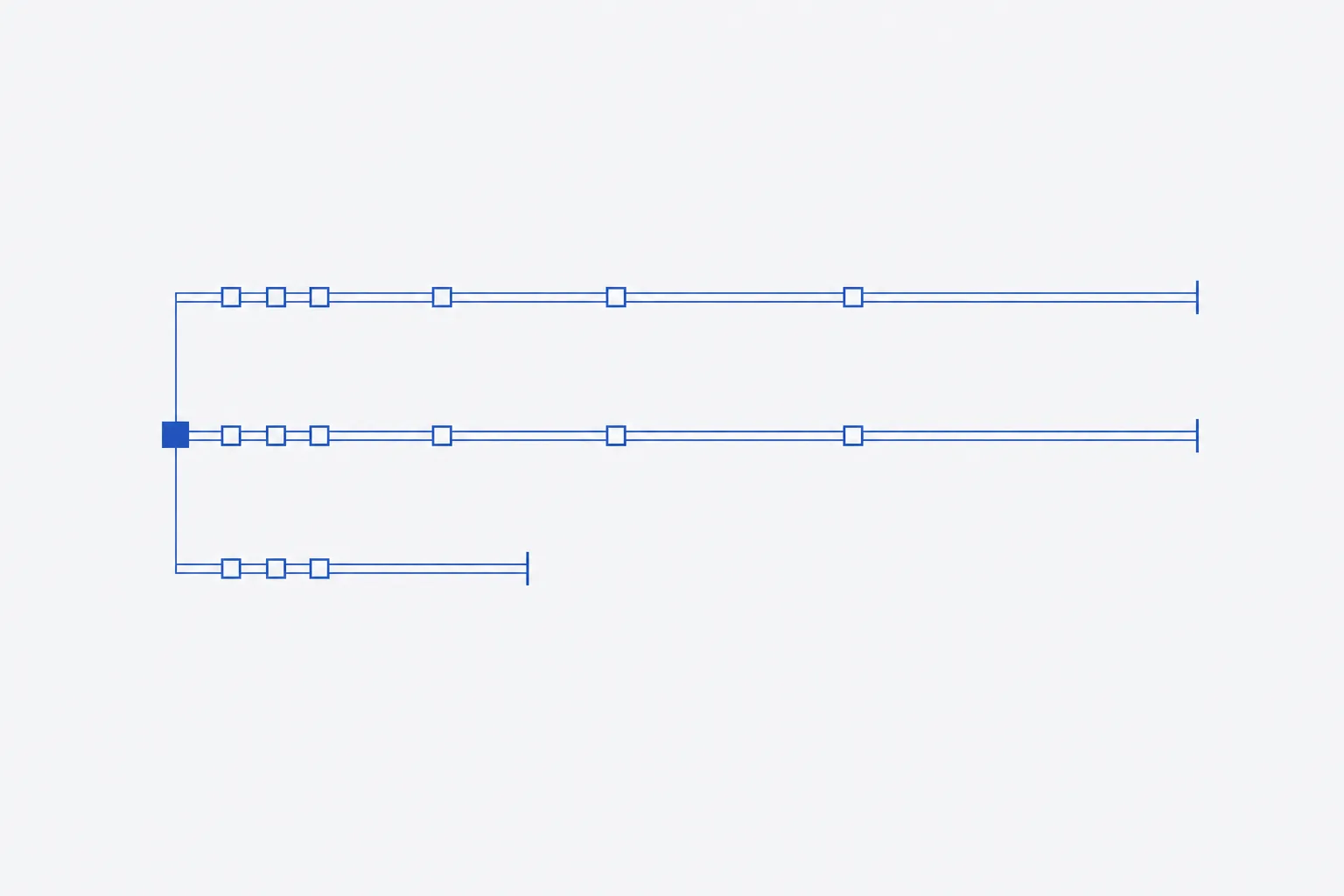
Status of the ICH stability guidelines
The ICH stability guidance has been a family of separate documents: Q1A(R2) on the core design, Q1B on photostability, Q1C on new dosage forms, Q1D on bracketing and matrixing, Q1E on evaluation of data, and Q5C for biotechnological products 14. In April 2025 the ICH Assembly endorsed a single consolidated draft, titled Q1 Stability Testing of Drug Substances and Drug Products, at Step 2 and released it for public consultation. It covers synthetic and biological products in one text and adds annexes on stability modelling 2. The FDA issued the same text as draft guidance in June 2025 6.
As of September 2026 the consolidated text is not final. The expert working group's work plan, dated February 2026, schedules Step 3 sign-off and Step 4 adoption for November 2026, after consultation comments are resolved 3. Until adoption, Q1A(R2) and its companions are the adopted guidance and the draft is a statement of direction. The core design below is common to both.
| Document | Subject | Status |
|---|---|---|
| Q1A(R2) | Core design: batches, conditions, frequency, evaluation principles | Step 4, February 2003. Adopted |
| Q1B | Photostability | Step 4, November 1996. Adopted |
| Q1C | New dosage forms | Step 4. Adopted |
| Q1D | Bracketing and matrixing designs | Step 4, February 2002. Adopted |
| Q1E | Evaluation of stability data | Step 4, February 2003. Adopted |
| Q5C | Biotechnological and biological products | Step 4. Adopted |
| Q1, consolidated | All of the above in one guideline, with modelling annexes | Step 2 draft, April 2025. Step 4 scheduled for November 2026 |
Step 1: state what the study must answer
Write the purpose as one sentence before anything else: this study establishes whether a named material, in a named form and container, held at a named condition, retains named attributes within named limits over a named period. Q1A(R2) calls the outcome a re-test period for a drug substance and a shelf life for a product 1. A research laboratory usually wants the first: the interval after which the material must be re-examined before further use.
Each physical form needs its own study. A result for the lyophilised solid says nothing about a frozen stock solution made from it, and a result for the frozen stock says nothing about a working dilution held in a refrigerator. The same applies to the container: a change of vial glass, closure or fill volume is a change of system.
| Form | Question | Condition usually studied |
|---|---|---|
| Lyophilised solid, sealed | Re-test interval for held stock | Freezer, with a refrigerator or ambient arm for handling and transit |
| Stock solution, frozen aliquots | Holding interval for prepared stock | Freezer; one thaw per aliquot |
| Working solution | In-use interval | Refrigerator or bench temperature, over days |
Step 2: choose the storage conditions
Q1A(R2) organises conditions by the intended storage of the material. Each case has a long-term condition, which sets the period, and where one exists an accelerated condition, which supports it and shows how sensitive the material is to excursions 1.
| Intended storage | Long-term | Accelerated | Minimum data at submission |
|---|---|---|---|
| Room temperature | 25 °C ± 2 °C / 60% RH ± 5% RH, or 30 °C ± 2 °C / 65% RH ± 5% RH | 40 °C ± 2 °C / 75% RH ± 5% RH; intermediate 30 °C / 65% RH if significant change occurs | 12 months long-term; 6 months accelerated |
| Refrigerator | 5 °C ± 3 °C | 25 °C ± 2 °C / 60% RH ± 5% RH | 12 months long-term; 6 months accelerated |
| Freezer | −20 °C ± 5 °C | None defined. One batch at an elevated temperature, for example 5 °C or 25 °C, to address excursions | 12 months long-term |
| Below −20 °C | Case by case | Case by case | Case by case |
For peptide material the refrigerator and freezer rows are the relevant ones. The missing accelerated condition for frozen storage is deliberate. No warmer condition leaves a frozen system the same system, because the ice melts and the chemistry changes. The elevated-temperature arm for frozen material answers a narrower question — what an excursion costs — not how long the material lasts 1.
A research study may add conditions Q1A(R2) does not list, provided the protocol records why: an ambient arm to quantify transit exposure, or a refrigerator arm for a solid that will sit in one during a working period. Humidity control matters only where the container is permeable. Q1A(R2) allows material in impermeable containers, such as sealed glass with an intact closure, to be studied without controlled humidity 1.
Step 3: set the pull points
Q1A(R2) sets long-term testing every three months over the first year, every six months over the second, and annually thereafter. At the accelerated condition it expects at least three time points including the first and last, such as 0, 3 and 6 months, from a six-month study, with extra points where results are expected to approach significant change. An intermediate study, when triggered, has at least four points from a twelve-month study, such as 0, 6, 9 and 12 months 1.
| Arm | Q1A(R2) pulls, months | Added research pulls | Reason |
|---|---|---|---|
| Long-term, freezer | 0, 3, 6, 9, 12, 18, 24 | None | Slow change; frequency follows Q1A(R2) |
| Long-term, refrigerator | 0, 3, 6, 9, 12, 18, 24 | 1 | Detects a fast route before the first quarterly pull |
| Accelerated | 0, 3, 6 | 1 | Separates a fast initial loss from a steady rate |
Time zero is a pull, not a formality. It fixes the baseline every later result is compared with, and it must be measured with the same methods, on the same instrument and in the same way as every other pull. A certificate value from the supplier is not a time-zero result.
Step 4: decide what to measure
Measure the attributes that can change and that matter to the use. Q1A(R2) is explicit that evaluation covers not only the assay but also degradation products and other relevant attributes 1. For peptides the chemical and physical routes are well known, and each needs an attribute that can see it 5.
| Attribute | Detects | Usual method |
|---|---|---|
| Appearance | Gross failure: collapse, discolouration, haze, particles | Visual inspection against a written description |
| Assay against a reference standard | Total loss, including aggregation and adsorption | Reversed-phase HPLC calibrated with a reference standard |
| Purity and individual degradants | Chemical routes | Reversed-phase HPLC shown to be stability-indicating |
| Identity of new peaks | Which route is operating | LC-MS |
| High-molecular-weight species | Aggregation | Size-exclusion chromatography |
| Water content, solid only | The main driver of solid-state rate | Karl Fischer titration |
| pH, solution only | The main driver of solution rate | Calibrated pH meter |
Every chromatographic method in that table must be stability-indicating: shown, using deliberately degraded material, to separate and measure the products the material forms. The companion entries on forced degradation and stability-indicating methods cover how that is shown. A method that has not been shown to see degradation cannot report its absence.
Step 5: batches and sample numbers
Q1A(R2) expects formal data on at least three primary batches, so that lot-to-lot variation is part of the result 1. A research study usually has one lot, sometimes two. One lot establishes the behaviour of that lot. Two lots show whether an unexpected result belongs to the material or to the batch. Record the choice and its consequence in the protocol.
Units are counted, not estimated. Each result at each pull should come from independent containers, not from repeated injections of one container: repeat injections measure the instrument, independent containers measure the material. The example below uses three units per pull and the schedule above.
| Arm | Pulls after time zero | Units |
|---|---|---|
| Time zero, shared by all arms | 1 | 3 |
| Long-term, freezer | 6 | 18 |
| Long-term, refrigerator | 7 | 21 |
| Accelerated | 3 | 9 |
| Reserve, one extra pull per arm | 3 | 9 |
| Total | — | 60 |
The reserve is not optional. An unexpected result triggers an investigation, and an investigation needs untouched units from the same arm and the same age. Without them the only available response is to repeat the measurement on the unit that produced the anomaly.
Step 6: fix the acceptance criteria and the evaluation
Write the limits before the first pull. Q1A(R2) defines significant change for a drug substance as failure to meet its specification. For a product it lists a 5% change in assay from the initial value, any degradation product exceeding its acceptance criterion, and failure of appearance or physical attributes, with pH where relevant 1. A research protocol can adopt the same form: an assay window, a limit for any single new degradant, a limit for total degradants, and a written appearance criterion.
Q1E sets the evaluation. Fit a regression to each attribute that changes; the supported period is where the one-sided 95% confidence limit of the mean line meets the acceptance criterion, not where the fitted line meets it. Data from more than one batch are pooled only if a statistical test, conventionally at the 0.25 significance level, shows their slopes and intercepts are not different 4. Extrapolation beyond the observed period is limited and assumes the same degradation relationship continues 1. The consolidated draft adds an annex on enhanced stability modelling that sets out when a qualified model may support a longer period 2.
The protocol template
- Purpose: the one-sentence statement, including the period the study is intended to support.
- Material: identity, lot, physical form, container and closure, fill, and date of manufacture or receipt.
- Conditions: each set point with its tolerance, the storage unit assigned, and how it is monitored and logged.
- Schedule: nominal pull dates for every arm, with a stated window around each date.
- Attributes and methods: each attribute, the method reference, and the evidence that the method is stability-indicating.
- Units: units per pull, the replicate design, and the reserve.
- Acceptance criteria: numeric limits for every attribute, written before time zero.
- Evaluation: regression approach, confidence limit, pooling rule, and the significant-change rule for accelerated arms.
- Deviations: how storage excursions, missed or late pulls and unexpected results are recorded and investigated.
- Report: data tables, plots of each attribute against time, and the conclusion stated as a period at a condition.
- Approval: author, reviewer and date, before the first pull.
Scaling to a small laboratory
Scaling down is legitimate if each reduction is written down with what it costs. The table sets the registration design beside a version a small laboratory can finish.
| Element | Q1A(R2) registration | Small-laboratory version | What is given up |
|---|---|---|---|
| Batches | At least three primary batches | One lot, two where possible | Lot-to-lot variation |
| Long-term duration | 12 months at submission, continued | The full period to be claimed, with no extrapolation | Nothing, if the claim stays inside the data |
| Accelerated arm | 6 months | 3 to 6 months with an added early pull | Resolution of slow routes |
| Storage units | Qualified stability chambers | A mapped freezer or refrigerator with a logged temperature record | Humidity control, irrelevant for sealed glass |
| Evaluation | Q1E statistics with pooling | Regression with a confidence limit for each lot | Pooling across lots |
The output of a study is a single sentence: this material, in this form and container, at this condition, met these criteria for this period. That sentence belongs to the formulation tested. Stability depends on sequence, excipients, residual moisture and container, and the literature supports a ranking of conditions rather than numbers for any particular preparation 5. Where the sentence is needed and no study exists, the honest position is that the period is unknown.
References
- ICH Q1A(R2) Stability Testing of New Drug Substances and Products
- ICH Q1 Stability Testing of Drug Substances and Drug Products — Step 2 draft guideline
- ICH Q1 EWG Work Plan, February 2026
- ICH Q1E Evaluation for Stability Data
- Stability of protein pharmaceuticals: an update
- Q1 Stability Testing of Drug Substances and Drug Products — draft guidance for industry